
Client Story: Iron Point FinancialFinancial Planning

A Financial Planning Firm Found Its Focus in the Different Needs of the People It Serves

“Finally, had a point in my career where I feel like I could breathe. It's great.”

Gregory A. Liszka, CFP®, RICP® · President, Iron Point Financial
Told with Greg Liszka · Published November 9, 2026
4 distinct audiences, each with its own questions and its own next step

Client Story Summary

From Reaching Everyone to Knowing Where to Focus

Greg wanted to serve everyone well, so his marketing tried to reach everyone at once. It's a common trap in financial advisor marketing: his time, energy and budget were spread in every direction.

Learn/Client Stories/Iron Point Financial

Greg Liszka in downtown Grove City in front of the Guthrie Theatre
Greg in downtown Grove City in 2017, the year we started working together.

Where They Started

A Planner Who Wanted Every Person to Have a Plan That Fits

When we met Greg Liszka in 2017, he was already building something good. Iron Point Financial was growing on the strength of his work as a certified financial planner, and Greg cared about people more than products. He wanted every client to have a plan that fit their life.

Greg asked if we would introduce him to our network of relationships. Before we did, we asked a simple question: who are your best clients? Greg's answer was honest and generous. Everyone.

That answer came from something real in Greg. He wanted every person who came to him to have a plan built around their life, not a product handed across a desk. As our conversations went deeper, we talked about how a message written for everyone is hard for anyone to hear as their own. So we sat down together and looked more closely at the clients Greg was able to serve best.

Greg Liszka in downtown Grove City in front of the Guthrie Theatre
Greg in downtown Grove City in 2017, the year we started working together.

What They Discovered

Four Audiences With Four Different Sets of Questions

As we talked through his best clients, the differences came into view. Someone already retired, or a few years away, needed something very different from someone around 40 who was helping their parents through retirement and starting to realize they needed a plan of their own.

After listening closely, we helped Greg create four distinct audiences. Each one represented where his clients were in life and how he could serve them well. Some had time on their side and were just getting started. Others were in the middle of busy years, getting close to retirement or leading a business with a team to take care of.

Seeing all four side by side gave Greg a new way to see each person who walked through his door: where they fit, what they were asking and what would help them next.
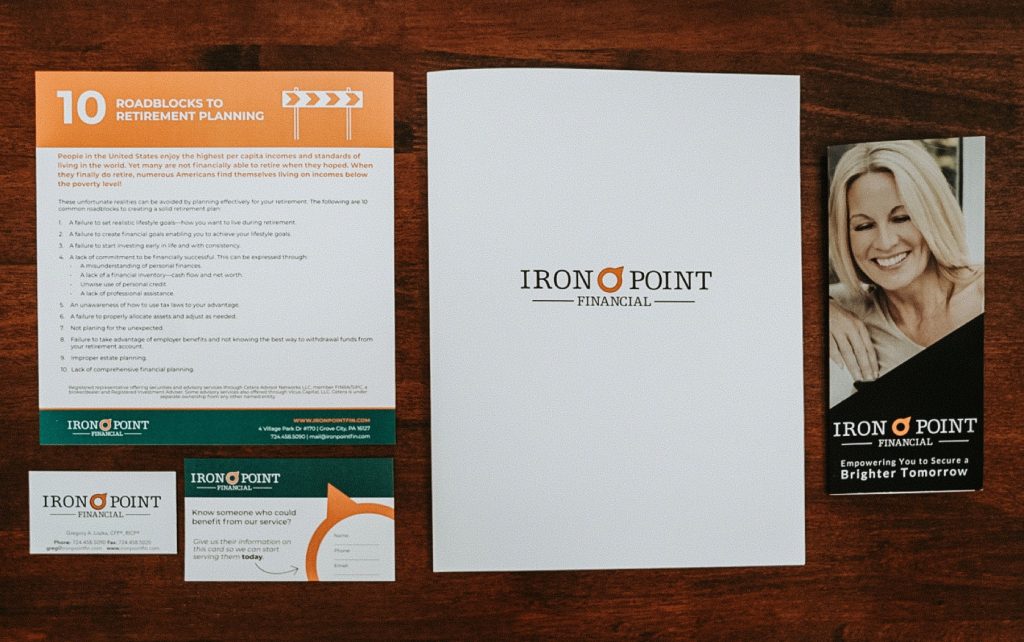
Iron Point Financial's printed planning resources, part of its financial advisor marketing, laid out on a desk

How It Changed the Work

Knowing Where to Put Time, Energy and Budget

After we reviewed the finished Clearsound Suite, Greg told us how helpful it had been, and he had already started putting it into practice. He described the change in a way we still remember. He had felt like he was punching everywhere, trying to reach everyone. Now he had a place to focus.

That focus became a budget of time, energy and money. Greg could decide where the marketing would go and where he would spend his own effort. Most of his clients were close to retirement, and he wanted to grow toward families he could serve for many years. People just getting started were a newer opportunity, and the same picture gave him a better way to serve business owners.

Iron Point Financial's printed planning resources, part of its financial advisor marketing, laid out on a desk
Greg smiling across the table as he hands over his Iron Point card

What the Questions Taught Us

The Questions Showed How Different Each Audience Really Is

As we built resources for each audience, the differences became even more concrete. A 32-year-old asks different questions than a 64-year-old, and the right answers are different too.

One of the things we love about working with Greg is that his conversations confirmed it again and again. Those questions became an early version of what we now call client pathways: knowing what each audience is asking and meeting them there with a helpful next step.

We're still finishing Iron Point's pathways. The questions Greg hears every week are telling us how each one should begin and where it should lead.

Greg smiling across the table as he hands over his Iron Point card
Greg leading a video meeting from the Iron Point office

Where They Are Now

Reaching the First Goals Opened a New Conversation

Over the years, Iron Point has built a library of resources for each audience, and we've seen real traction with the audiences and industries Greg set out to reach.

Then came one of our favorite kinds of conversations. Greg told us they had reached the goals we set at the beginning, so it was time to set new ones.

Greg has always cared about regular reviews that keep each client's plan current. He has trained another team member to lead them, and he wants to keep multiplying that so more people can have a plan that fits.


Greg leading a video meeting from the Iron Point office
Greg meeting with two people at the Iron Point conference table

Working Together

A word from Greg Liszka

Iron Point Financial and Clearsound have worked together since 2017, beginning with the Clearsound Suite. Today we keep building resources and client pathways for each of the audiences Greg serves.

“We transformed a chaotic marketing plan into a clear and precise process!”

Gregory A. Liszka, CFP®, RICP® President, Iron Point Financial

A Broader Lesson

For Leaders Who Want to Serve Everyone Well

Name More Than One Audience

Everyone is too broad for anyone to hear their own story. Two to four audiences give your message somewhere to land.

Listen for the Questions

What people ask tells you what they need and where their next step should begin.

Focus Where You Want to Grow

Knowing your audiences lets you put time, energy and budget toward the people you most want to serve. That's true in marketing for financial advisors and in almost every business.

76%

of consumers get frustrated when companies don’t personalize their interactions McKinsey & Company, Next in Personalization 2021

“The aim of marketing is to know and understand the customer so well that the product or service fits him and sells itself.”

Ready to Know Where to Focus?

Start with one conversation about the people you serve best.

Common Questions

Different people come with different needs. Naming two to four audiences helps each one hear a message written for them.

When a business tries to speak to everyone, the message gets general enough that no one hears it as their own. Naming a few distinct audiences lets you describe each one's situation, answer its questions and offer a next step that fits. Focus pays off for planners in particular. Kitces Research found that advisors who serve a defined niche were more satisfied with the quality of their leads and reported client growth of 58 percent, compared with 26 percent for firms without one. You can still serve many kinds of people well.

Source: Kitces Research, Niches Improve Advisor Marketing Satisfaction and Efficiency

Listen to the questions they ask. When the questions and the right answers change, you're looking at different audiences.

Start with your best clients and look for what makes them different: their season of life, what they're worried about and what they need from you first. Then listen in real conversations. If one group asks whether planning matters yet and another asks how to make what they've built last through retirement, those are different audiences. The differences show up again as you create resources, because the answer that helps one person may not be the right answer for another.

Each audience's questions show where its pathway should begin, what it should answer and which next step makes sense.

A pathway is a way of meeting people where they are. The first questions someone asks tell you where to start the conversation. The questions that come next show what they need to understand before a decision. When you gather those questions for each audience, you can build articles, resources and next steps that move people forward instead of leaving them at a dead end. That's how the work keeps helping long after the first conversation. For Iron Point, those questions are shaping each pathway now.