

A guy walks into a bar,
and walks out with his first client.
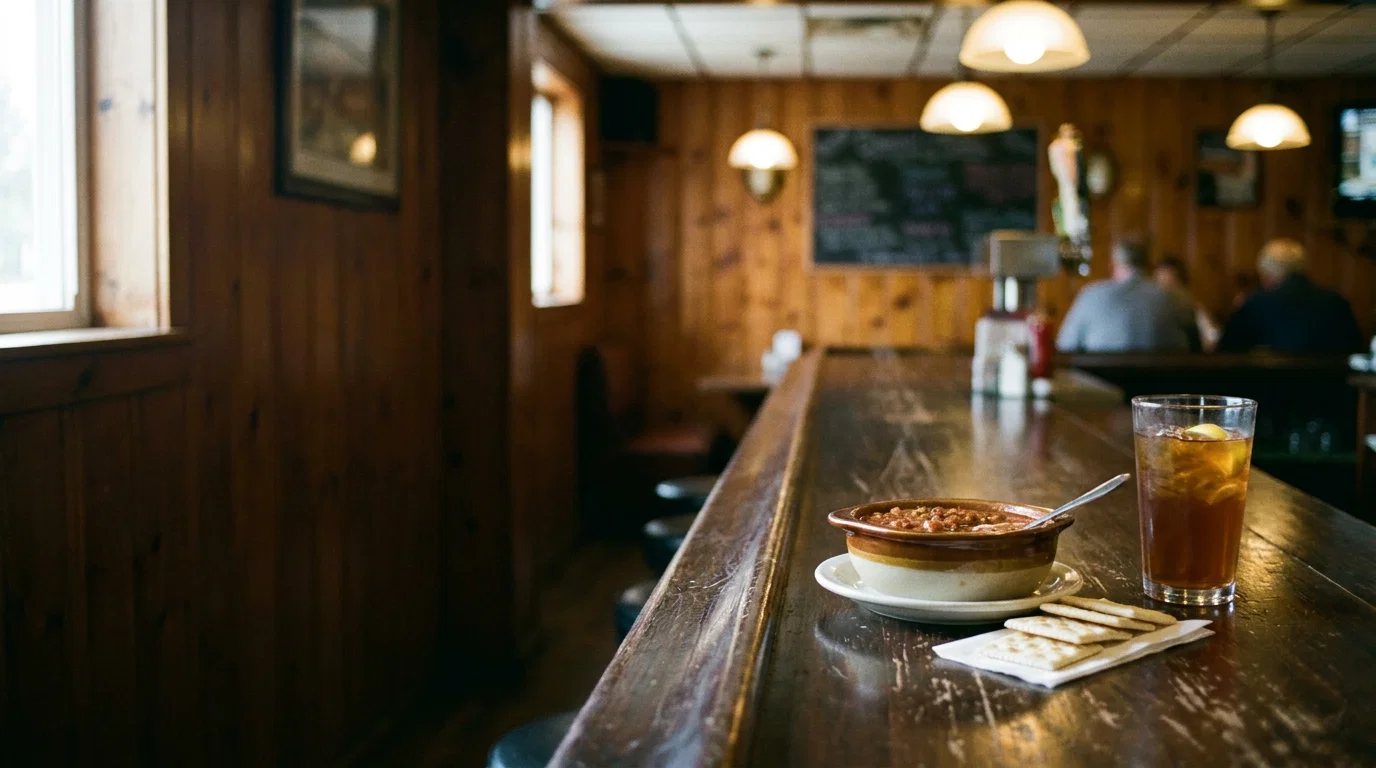
In 2013, I stopped for lunch at the local bar in Grove City at least once a week. It was only a few doors down from my office, and a waitress named Rose made a great chili.
One day, Rich Baker walked up to my table. He'd been the minority partner and had just bought out the other owner.
He wanted to change what the place was known for. Instead of a bar with good food, he wanted a restaurant with a great bar, a hometown grill that Grove City would love.
I hadn't pitched him. In fact, I hadn't even officially opened my business yet.
Earlier that year, I'd been testing a tool I was developing for businesses called the Flip Side Map. Its focus was a growth plan with simple action steps that connected where a business was to where its owner wanted it to be in two or three years. I found two local businesses to be my portfolio and gave them free plans. Both owners told me it made a real difference.
Jerome, a young man who cleaned Rich's bar, knew both of those owners. He told Rich to call me. Rich didn't need to, because I walked in for lunch before he could.
Broad Street Grille became my first paying client.
Together, we changed the way the restaurant communicated: new menus, a new website, new merchandise and a new sign out front. Rich brought in contractors to redo the front of the building, and that before-and-after belongs to him. But the new brand was part of it, and because we were there so often, people connected our work with what was happening inside.
In November 2014, Broad Street Grille won Best Marketing Effort of the Year from the Grove City Area Chamber of Commerce.

Relationship marketing
starts with who's watching.
That's relationship marketing. It isn't a networking script or a points program. It's the trust you build with the people around your work, long before any of them become a lead.
The person who sends your next client usually isn't a prospect. It's someone close enough to see how you treat people: a client, a neighbor, the guy who cleans the bar. Referrals are the fruit. Good work is the root.
Good work travels further
than you'd ever plan.
Soon my friend Ryan Bibza called. He and Ryan Bonner were starting a real estate company, and they wanted to talk. We helped them create a new brand and showcase what they were doing. They both worked hard and grew their company in a way that was good for business and for the people they served.
Within a few years, we were serving seven or eight businesses up and down Broad Street.
As we kept serving businesses in our hometown, word began to spread, and we started serving people around the region.
One of those introductions came through an old friend, Jeff Swogger. Jeff was pastoring a church in Ohio that needed a website. It was a small, simple job. We did it well, and Jeff felt well served.
Jeff was a businessman first. A few years later, when he started a small business called Refresh Air, he asked us to build that website too.
Because Jeff had been happy with our work, he spoke up when Litco International, a Vienna, Ohio, maker of eco-friendly transit protection products, started talking about a new website. He asked that we be included in the interviews. We brought Litco's two customer-facing websites and its online store together into one site, so their customers could find everything in one place.
Jerry Stethem, a consultant who had been part of Litco's decision, saw how that project went. When Millwood, a pallet and packaging company just down the road, started looking at its own website, Jerry spoke up for us. We built an expanded website and launched a content plan aligned with the goals set by their leadership.
One small church website led to a small business site, which led to two manufacturers. Nobody mapped that out.
The same thing is happening in your business. Somewhere, someone you served well is telling a friend about you.
98%+
of our business has come through referrals, from one restaurant in Grove City to clients across the country.
Clearsound, 2013 to 2026Here are three lessons
from thirteen years of referrals.
1Referrals aren't an accident, so invite them from the start.
When we're closing a new engagement, we tell clients what we're committing to. We want a long-term relationship, and we're going to help them succeed in a way they'll be excited to tell their friends about.
When we do a good job serving our clients, they often want to stay and grow their budget with us. Referrals follow.
We also ask. During regular reviews, we ask if anyone comes to mind that we might be able to serve. Because we set that up at the start, the ask never feels like a favor. It feels like a next step we both care about.
We've learned not to wait until we need a referral to ask for one. We learned it the hard way when a big project wrapped up just as a client had to delay their next one, and we needed more work than we had on hand. Waiting until you need a referral is a bad plan. Asking regularly and cultivating relationships keeps good activity in your pipeline.
And if a happy client won't refer you or leave a review, don't guess. Ask. Their answer may show you something you can do better.
2Even a referral will look you up,
so your words online have to match.
Here's the honest part. Because referrals kept us busy, we rarely marketed ourselves. We've lost good jobs because of it. People heard good things, looked us up, and what they found didn't match what they'd been told.
We once presented to a doctor who was interested in hiring us, and the presentation went well. But when she sent our information to her business partner, the partner checked our website. Our old website wasn't wrong, but it didn't talk about the kind of work she needed, and we weren't even considered.
This happens to good businesses all the time. You're great at what you do. People recommend you. Then someone searches your name. They read your homepage, scan your reviews and look for proof that you're the business their friend described. If what they find in your own words doesn't match what they heard, it gives them pause, and sometimes they move on.
That isn't to say referrals have lost their value. They haven't. But today, a referral needs to be reinforced by what people find about you online. Even in industries that never needed much of an online presence, it matters what people find when they Google you or ask AI to tell them about you.
So we're practicing what we help our clients do, one step at a time, and we've put those steps in a free guide.
3Serving people well is the foundation.
A great marketing plan can't cover for a lack of integrity. If your business has grown on referrals, that's proof of substance. People trusted you, and you came through.
That's why it's much easier to grow an online presence to match real-world authority than to build authority behind a pretty website. A good website can't make up for poor work. Good work just needs to be seen.
We love finding the best businesses with the worst websites. But we also know that what not marketing is costing them is often more than they can bear. Referrals slow down for ordinary reasons: a big client wraps up, a referrer retires or moves, or the business grows past the people its clients happen to know. Most owners don't have a plan for that moment.
If you've wondered what that gap might be costing you, the Marketing ROI Calculator can help you see it.
Your next client is already watching. Keep serving the people in front of you well, then make sure that when someone searches your name, they find the business they were told about.